
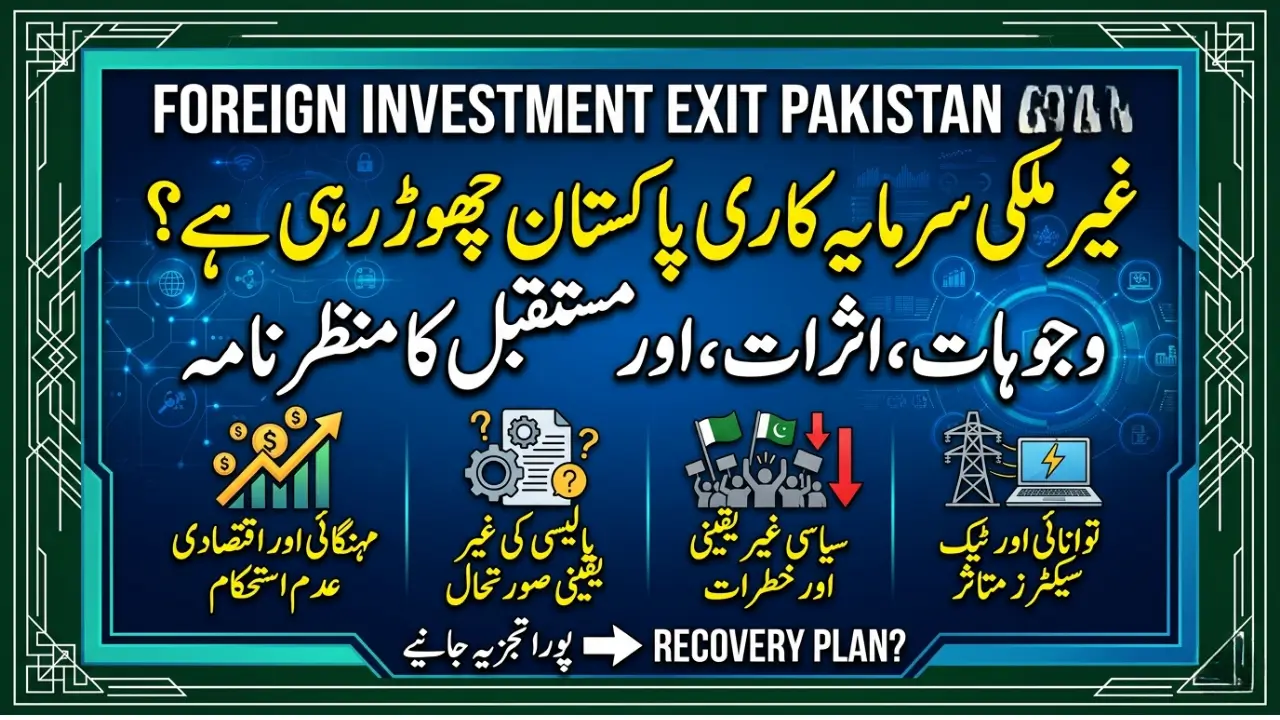
Foreign investment exit in Pakistan has become a significant concern in 2026, with multiple sectors witnessing a decline in overseas capital inflows. Investors are increasingly withdrawing funds due to economic instability, policy uncertainties, rising inflation, and global market shifts.
This article explores the primary causes of foreign investment exits, their impact on the Pakistani economy, and what strategies could attract investors back. By understanding these trends, readers will gain insight into the financial landscape and potential opportunities for recovery and growth in Pakistan.
Read More: Punjab Petrol Subsidy 2026
Causes of Foreign Investment Exit
Several factors have contributed to foreign investors pulling their capital out of Pakistan. Economic instability remains a key driver, as fluctuating exchange rates and inflation create uncertainty in returns. Policy inconsistencies and regulatory hurdles further discourage long-term investments. Political volatility also plays a role, as investors seek markets with predictable governance. Additionally, rising global interest rates and better investment prospects abroad have shifted investor preference away from emerging markets like Pakistan.
Economic Instability and Inflation
Inflation in Pakistan has reached multi-year highs in 2026, eroding purchasing power and profit margins for foreign companies. Currency depreciation increases the cost of imports, negatively affecting industrial production and trade. Investors are hesitant to commit to a market where their returns may be offset by rapidly changing economic conditions. Without stable macroeconomic indicators, foreign capital is likely to remain cautious or exit entirely.
Read More: Tecno Camon 50 Pro Review
Policy Uncertainty and Regulatory Challenges
Inconsistent policies regarding taxation, trade tariffs, and foreign ownership have created a sense of unpredictability for investors. Regulatory challenges, including delays in approvals and lack of clear guidelines, make it difficult for foreign businesses to operate efficiently. Streamlining these processes and creating investor-friendly regulations could be crucial for retaining existing capital and attracting new investment.
Political Factors Affecting Investment
Political instability continues to influence investor decisions. Frequent government changes, protests, and policy reversals signal higher risk. Investors typically prefer markets with stable leadership and predictable economic strategies. Political uncertainty directly impacts investor confidence, leading to capital withdrawal, especially in sensitive sectors such as energy, telecommunications, and real estate.
Sector-wise Impact of Investment Exit
The exit of foreign investment is uneven across sectors. Manufacturing and technology industries face lower inflows due to operational risks, while energy and infrastructure projects see delays or cancellations. The stock market and banking sector are also affected, as reduced foreign ownership can lead to lower liquidity and stock price volatility. The private sector’s growth slows, affecting employment and overall GDP growth.
Read More: OPPO K15 Pro – Camera, Battery
Key Sectors Affected:
- Energy: Delays in power projects and renewable energy investments
- Technology: Reduced venture capital and software export potential
Measures to Attract Foreign Investors
To reverse the trend of capital exit, Pakistan must adopt a combination of economic, political, and regulatory reforms. Key measures include:
- Stabilizing the macroeconomic environment and controlling inflation
- Offering tax incentives and simplifying business regulations
- Strengthening political stability and ensuring policy continuity
- Encouraging public-private partnerships to improve infrastructure and energy availability
Global Factors Influencing Investment Decisions
Foreign investment is also influenced by global economic conditions. Rising interest rates in developed countries make investments there more attractive than in emerging markets. Geopolitical tensions and trade disruptions can further affect investor confidence in Pakistan. Understanding these global dynamics is essential for local policymakers to design strategies that remain competitive internationally.
Read More: Diesel Price in Pakistan Today
Future Outlook for Pakistan’s Economy
Despite current challenges, Pakistan has opportunities to regain investor trust. Structural reforms, improved governance, and targeted incentives can attract foreign capital back into critical sectors. Long-term recovery depends on consistent policy implementation, transparency, and economic stabilization. If these measures are adopted effectively, Pakistan could see renewed foreign investment inflows by 2027–2028, supporting economic growth and job creation.
Conclusion
The exit of foreign investment from Pakistan in 2026 highlights the pressing need for economic stabilization, policy clarity, and political stability. While current trends indicate caution, targeted reforms and strategic incentives can restore investor confidence. By focusing on sustainable growth and a transparent business environment, Pakistan can attract foreign capital once again, fostering long-term economic development and resilience.
Read More: Punjab Govt Petrol Subsidy 2026